There’s a strange thing happening in FMCG at the moment.
Messy? Absolutely.
But that’s the point.
FMCG consumer behaviour has never been neat, but right now it’s moving fast. Food prices remain a top concern for UK consumers, with nearly 9 in 10 citing them, alongside growing worries about ultra-processed foods (Food Standards Agency). At the same time, alcohol habits are shifting too, with UK adults generally drinking less often than in 2018 (Drinkaware). So where does that leave FMCG brands?
With a problem, really. Because when behaviour is moving this quickly, the insight you gathered six months ago can start to feel a bit dusty. And when consumers themselves are conflicted, asking them to explain what they do after the fact will only get you so far.
That’s where accompanied shopping research for FMCG brands comes into its own. Not because interviews and focus groups are redundant. Far from it. But because the real moment of truth doesn’t happen in a viewing facility.
It happens at the shelf.
The problem with asking people what they did later
Let’s be fair to traditional qualitative research. Focus groups and depth interviews are still incredibly useful.
They help researchers explore brand perception, emotional associations, product concepts, packaging responses and broader attitudes. If you want to know how people talk about a category, what language they use, how they feel about your brand or whether a new idea makes sense to them, interviews can do a brilliant job.
But they have one obvious limitation when it comes to FMCG shopper decisions.
People are not always reliable narrators of their own behaviour.
Not because they’re lying. Usually, they’re not. It’s more subtle than that. We all reconstruct our decisions after the event, smoothing over the awkward bits and adding logic where there may not have been much logic at all. That’s recall bias in market research, and in FMCG it can be particularly costly.
A shopper might tell you they always buy a particular brand because of quality. Then, in store, they reach for the own-brand equivalent because it’s right next to it and 80p cheaper.
Someone might say health is their top priority. Then they grab a snack from a promotional display they later insist they “probably wouldn’t notice”.
Another person might describe their shopping decisions as careful and considered. In reality, they choose in just a few seconds because they’re tired, the aisle is busy, their child is asking for something, and the product they normally buy is out of stock.
That kind of detail is difficult to recall because, in the moment, it barely feels like a decision. It feels like shopping.
And that’s exactly why brands need to get closer.
It’s also where relying too heavily on existing data, AI summaries or retrospective research can get a bit wobbly. Those inputs can be useful, of course. But if they’re based on historic behaviour, broad assumptions or what people claim they do, they may miss the small in-the-moment trade-offs that decide whether a product actually makes it into the basket.
What accompanied shopping reveals that interviews can’t
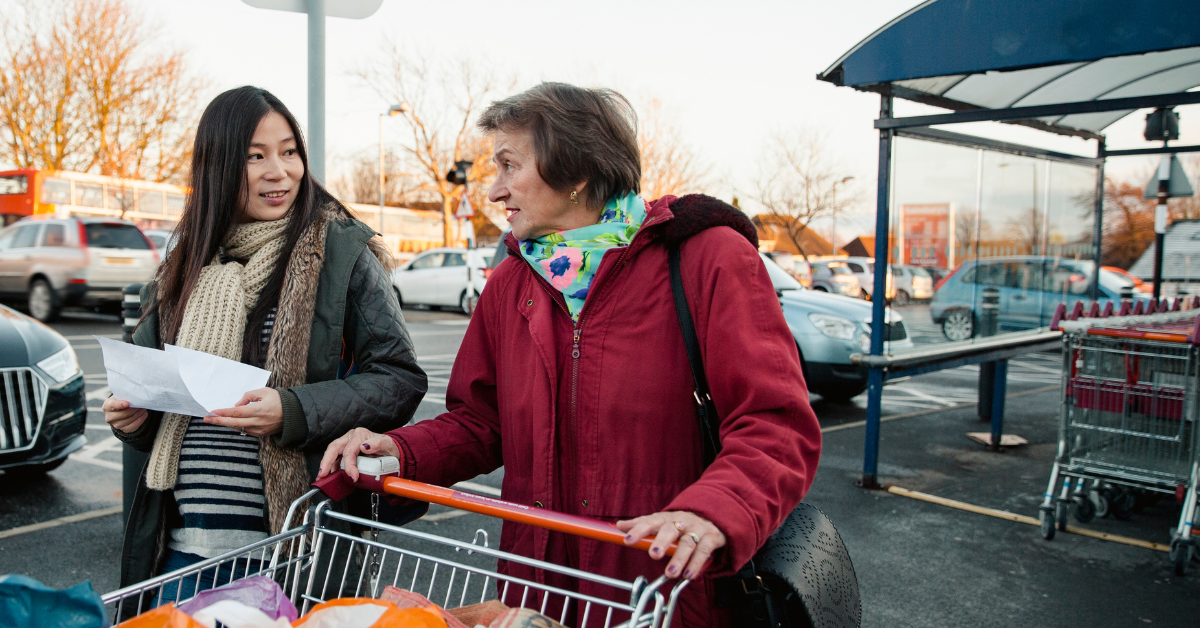
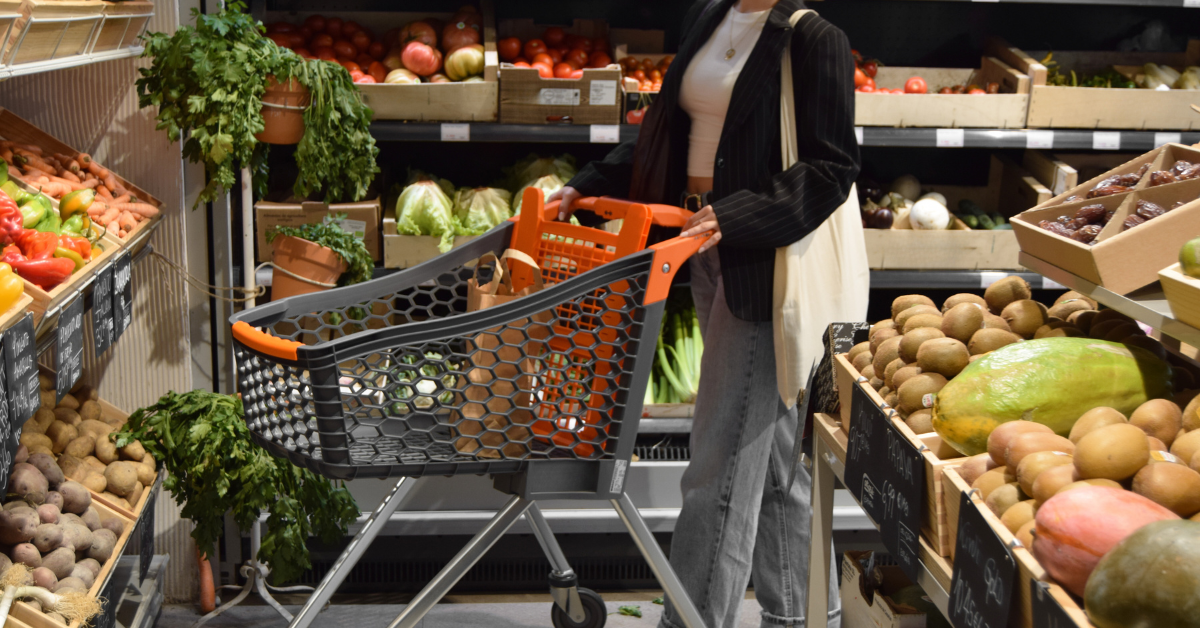
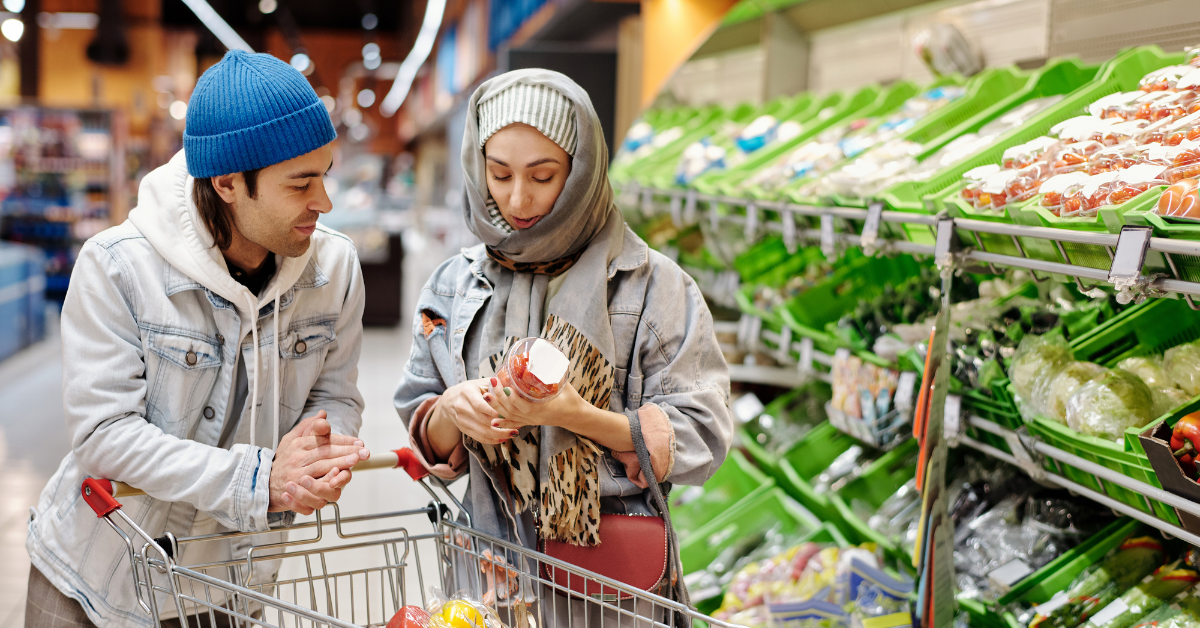
Accompanied shopping research puts the researcher alongside the shopper while the behaviour is happening. Not weeks later. Not in a slightly artificial group discussion where everyone is trying to sound thoughtful. Right there, in the aisle, at the fixture, in the café, at the bar, in the place where tiny cues can change what gets picked up.
For FMCG brands, that shift in context matters.
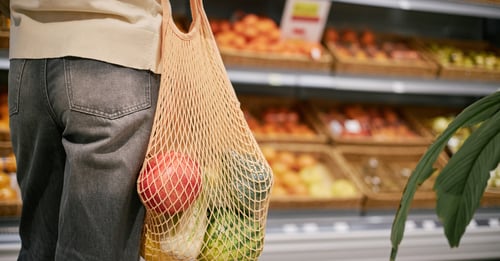
A supermarket shelf is not a neutral environment. Store layout, fixture placement, shelf height, packaging colour, price labels, promotional mechanics and the behaviour of other shoppers all shape decisions. Sometimes consciously. Often not.
A participant might not remember that they ignored the top shelf entirely. Or that they only compared two products because they were placed side by side. Or that they hesitated for a split second over a “3 for 2” before deciding it was worth trading up. Or that they looked at the calorie label on a menu, pulled a face, and chose something else.
These are small moments. But commercially, they’re not small at all.
For food and drink brands, accompanied shopping can help uncover what shoppers are genuinely comparing at the point of purchase. Is it price per pack? Price per portion? Protein content? Sugar? Brand familiarity? A promotion? The fact that the packaging looks “less processed”? Or, and this happens more than people like to admit, is it just the thing that’s easiest to grab?
This is where shopper research for FMCG becomes much richer than a post-rationalised account. You see the pauses. The shortcuts. The workarounds. The products that nearly make it into the basket but don’t. The claims people read and the claims they glide past. The price differences they care about and the ones they don’t even register.
It also captures social dynamics.
Because people rarely shop in a vacuum. A parent shopping with a child may make a very different choice from the one they would make alone. A couple might negotiate between health, price and preference without even realising they’re doing it. Friends buying drinks before a night in might be influenced by group norms, pack size or who’s paying.
And the same applies beyond the supermarket.
This is why accompanied shopping in the AI age feels especially relevant. AI can summarise trends, scrape sentiment and make predictions from existing data. Handy, yes. But it can also be based on old, incomplete or overly generalised information. It can’t stand next to a shopper while they change their mind because the offer wasn’t quite as good as it looked.
Real-world context still counts.
Actually, it counts more than ever.
The most valuable moments in accompanied shopping research are often the ones participants wouldn’t think to mention later: the product they nearly chose, the offer they misunderstood, or the quick glance at a label.
That’s why recruitment matters. For accompanied shopping research for FMCG brands, you need the right shoppers in the right context, with relevant behaviours and decision pressures. Otherwise, you risk observing a trip that looks real but doesn’t answer the commercial question.
Digital ethnography: extending the lens beyond one shop
Of course, one shopping trip will only ever show one slice of behaviour.
That’s where digital ethnography adds another layer. If accompanied shopping captures the in-the-moment purchase, digital ethnography helps reveal the wider pattern around it: what people buy, consume, avoid, crave, justify, forget, repeat and abandon across different days and occasions.
And for FMCG, occasions matter enormously.
The same person might shop very differently at the end of the month compared with payday week. They may buy one set of products when hosting friends, another after a stressful commute, and something else entirely when they’re trying to “be good” on a Monday morning.
A participant using GLP-1 medication may find that snacking changes from day to day depending on appetite, side effects, mood or routine. Someone influenced by TikTok food trends might save a recipe, talk enthusiastically about it, even buy one ingredient — but never actually make the thing. Or they might suddenly start hunting down a product they’d never noticed before because it’s appeared in their feed four times that week.
That’s hard to capture in a single interview.
Interviews can flatten behaviour into a tidy story. Digital ethnography food and drink research does the opposite. It keeps the texture in. Photos, videos, diary entries and in-the-moment reflections help researchers understand how consumption really plays out in homes, shops, workplaces and social settings.
Not what people think they do.
What they actually do.
And, just as importantly, when and why that behaviour shifts.
Use accompanied shopping to understand the purchase moment. Use digital ethnography to understand repeated consumption over time. Use both when categories are changing quickly and you need to link what people buy with how they live.
For FMCG teams, this combination is powerful. It shows whether a health claim influences shelf behaviour, reveals when products are bought for one occasion but used in another, and explains why “usual” behaviour shifts as budget, mood, family dynamics and plans change.
Why FMCG brands need this now
The real risk for FMCG brands is not just missing a trend. It’s misunderstanding what that trend means in practice.
A survey might tell you that consumers care about protein. But does that mean they’re choosing high-protein snacks in store, or just talking about them? A dataset might show growing concern around UPFs. But does that concern override price, taste and convenience when someone is doing a Tuesday-night top-up shop? A segmentation study might tell you who your health-conscious shopper is. But is that segment still behaving the same way now the category, economy and social conversation have moved on?
Perhaps. Perhaps not.
That uncertainty is exactly the point.
In a market this dynamic, relying purely on legacy data, broad assumptions or retrospective accounts leaves too much room for distortion. FMCG brands need research that can keep pace with behaviour as it is happening. Not behaviour as people remember it, or behaviour as a model predicts it based on yesterday’s signals.
Customer closeness in FMCG is not about making research more complicated for the sake of it. It’s about getting close enough to see the difference between what people say matters and what actually gets a product into the basket.
Because those two things are not always the same.
Often, they’re not.
And when the cost of getting it wrong includes missed listings, weak repeat purchase, poor messaging, underperforming promotions or a product that simply doesn’t cut through at shelf, getting closer is not a nice-to-have. It’s a commercial necessity.
Getting closer to the real decision
At Angelfish Fieldwork, we help brands and research agencies recruit real consumers for immersive, in-context research, from FMCG market research to accompanied shopping, digital ethnography and wider customer closeness projects.
Our role is to help make that research possible with the right people, not just available people. That means recruiting participants who reflect the behaviours, category habits, shopping contexts and decision-making pressures your project needs to understand, then supporting the process so researchers can focus on the insight rather than worrying about whether the sample will hold up.
One food and drink project saw us deliver 30 participants in 2 days, with a 100% completion rate and a 4.8 average participant experience rating. As our research agency partner Human8 put it:
“We were so pleased with the quality of the video responses and the way Angelfish managed the entire process. Their ability to deliver exceptional results under such a tight timeline was impressive, and the level of support throughout made the project run seamlessly.”
You can see how we supported a global food and drink brand here.
And if you’re planning accompanied shopping research for FMCG brands, digital ethnography or a wider customer closeness project, now is a good time to get close to the moments that matter.
Because what gets remembered in an interview is useful.
But what gets picked up, compared, questioned, swapped, rejected or dropped into the basket?
That’s where the sharper insight usually lives.


-3.png?width=500&name=Untitled%20design%20(5)-3.png)