
AI is no longer a novelty in market research. Recent industry reporting suggests that 98% of researchers now use AI daily, applying it to tasks such as sentiment analysis, social listening, predictive modelling and automated reporting. For many teams, it has become a practical, everyday tool.
And it has clear benefits. AI speeds up analysis. It helps teams process larger volumes of data. It can surface patterns quickly and at scale.
But speed does not equal understanding.
As markets shift rapidly and consumer behaviour evolves in real time, brands need more than patterns. They need context.
That is where accompanied shopping market research earns its place.
When Markets Move Fast, Assumptions Date Quickly
The UK consumer landscape has changed dramatically since the start of the 2020s. The pandemic altered routines. Remote working reshaped daily habits. The cost of living crisis forced new spending priorities. Social platforms accelerated micro-trends that rise and disappear within weeks.
At the same time, there are signs of fatigue. Younger audiences are questioning hyper-fast trend cycles and constant online performance. Conversations are shifting towards comfort, intentionality and emotional self-protection. What appears as a clear trend in a dataset can mask more complex motivations beneath the surface.
In fast-moving environments, historical data ages quickly. Modelled personas can flatten nuance. AI tools detect patterns based on existing inputs, but if behaviour is shifting, those inputs can lag behind reality.
For those looking at customer trends and insights within the retail and leisure sectors, this creates risk.
When decisions are based purely on scaled insight, there is a danger of scaling the wrong assumption.
Customer closeness protects against that.
What AI Cannot See in a Store
AI can tell you that engagement has dropped.
It can show that basket value has shifted.
It can flag a change in sentiment.
What it cannot do is walk the aisle with customers.
It cannot see the hesitation before a consumer picks up a product. It cannot observe the quick comparison glance at a cheaper alternative. It cannot notice when someone looks inspired by a display but ultimately chooses practicality.
In-store shopper behaviour research reveals:
- Micro-frictions that interrupt decision-making
- Attention patterns that influence choice
- Emotional cues that shape perception
- Social dynamics that affect confidence and spending
These details often determine whether a product is chosen, ignored or almost selected.
Accompanied shopping captures those moments in real time, before memory reshapes them into something more rational and polished.

Why Accompanied Shopping Market Research Works
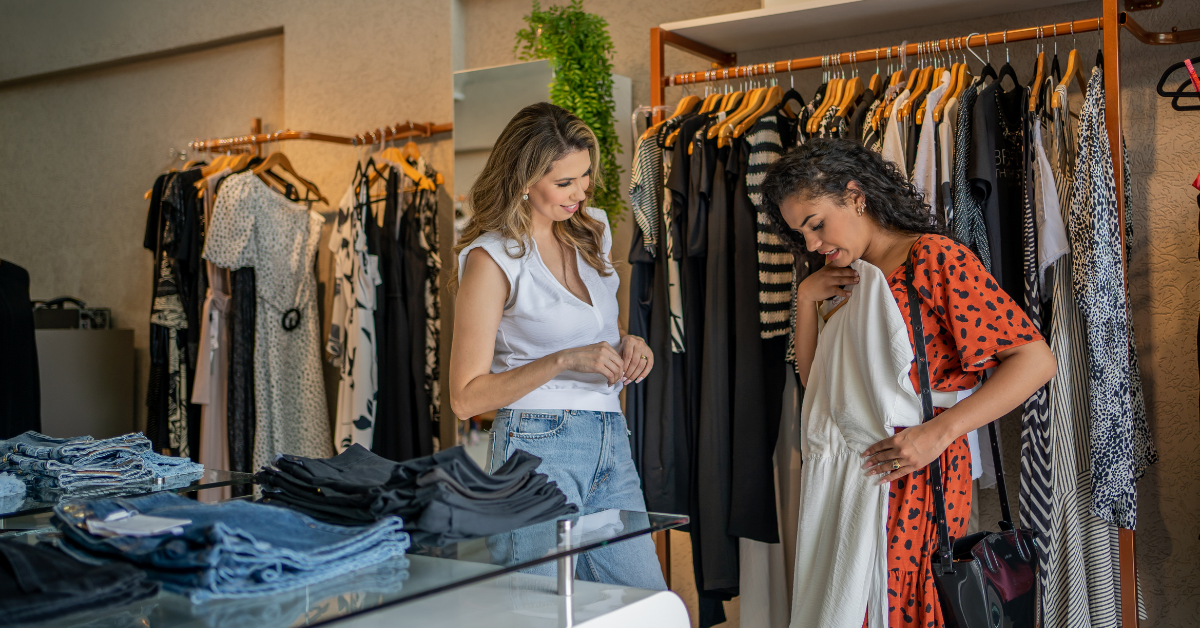
Accompanied shopping market research involves guided shop-alongs in real retail environments. A researcher walks alongside a shopper, observing behaviour and asking light-touch questions as decisions unfold naturally.
Shoppers are not reconstructing what they did last week. They are navigating real shelves, real pricing, real signage and real distractions. Researchers can gently probe moments of hesitation, confusion or excitement while they are still fresh.
For brands, this delivers practical advantages:
- It reveals the true decision journey from entry to checkout
- It exposes contradictions between stated preference and actual choice
- It highlights environmental triggers influencing behaviour
- It surfaces unmet needs and improvised workarounds
Accompanied shopping market research does not replace analytics, intercepts or workshops. It strengthens them.
When paired with other methods, it adds depth and context that improve interpretation.
A Recent Example: Grounding Insight in Behaviour
Angelfish worked alongside a longstanding home retail client to develop a methodology that would allow them to get up close and personal with their customers.
We recruited twenty customers across two groups to complete a thirty-minute accompanied store walk, followed by a ninety-minute focus group in front of eight to ten members of the client team.
During the in-store shop-along, participants were asked to:
- Explore products they felt drawn to, particularly seasonal ranges
- Highlight areas of the store that inspired or excited them
- Identify spaces that felt unclear, uninspiring or difficult to navigate
The store walk surfaced behaviour. The focus group gave it language.
Because the workshop followed immediately afterwards, shoppers were discussing decisions that had just happened. Researchers could probe into moments of hesitation, excitement or doubt while they were still fresh. Client stakeholders were able to observe, ask questions and see the nuance behind choices in real time.
Instead of reacting to slides, the team reacted to people.
The impact was immediate. Shared understanding formed quickly. Internal debates softened because behaviour had been witnessed, not interpreted second-hand.
It created momentum. And it grounded future decisions in lived experience rather than assumption.
When to Use Accompanied Shopping Research
Accompanied shopping market research is particularly valuable when context matters.
It works well when:
- Retail layout, range or merchandising is under review
- A new launch needs real-world validation
- Sales data shows a pattern but the reason behind it is unclear
- There is a noticeable gap between what customers say and what they do
- Internal stakeholders are debating direction and need behavioural evidence
In each scenario, the objective is the same. To see customers in context and ensure decisions reflect real behaviour rather than projection.
Customer Closeness Protects Decision Quality
AI will continue to improve. Its role in research is established and growing. It will remain a powerful tool for surfacing signals and accelerating analysis.
But brands compete on decision quality.
Decision quality depends on understanding how people behave in real environments, under real pressures, with real constraints.
Accompanied shopping market research keeps insight connected to lived experience. It gives brand teams the confidence that the patterns they are acting on reflect reality.
AI can scale insight.
Customer closeness protects it.
If you would like to see how this approach works in practice, explore our recent accompanied shopping case study.
Further Reading
Want to explore whether accompanied shopping market research is the right fit for your next project?
You might also find these useful:


.webp?width=500&name=shutterstock_258487925%20(1).webp)